Ultimate Guide to the Best Exterior Cladding for Residential Homes
Residential architecture demands a sophisticated reconciliation of aesthetic intent, structural performance, and environmental resilience. The building envelope serves as the primary defensive barrier against dynamic atmospheric forces, including extreme temperature fluctuations, wind-driven precipitation, ultraviolet radiation, and acoustic interference. Best exterior cladding for residential homes. Selecting the material composition that forms this barrier requires an analytical understanding of physics, material science, and local climatic loads. The outer skin of a residential structure does not function in isolation; it operates as an integrated assembly comprising water-resistive barriers, drainage paths, thermal insulation, and structural fastening systems.
The process of evaluating facade options involves balancing immediate capital expenditures against lifecycle operational costs and maintenance liabilities. A material that exhibits exceptional durability in a dry, temperate climate may experience accelerated degradation in coastal or high-humidity environments. Furthermore, architectural styles and regional vernaculars establish aesthetic benchmarks that must be satisfied without compromising building physics. Modern construction standards also emphasize energy performance and carbon footprint, elevating the environmental assessment of building materials to a core component of the selection process.
Navigating the array of available wall assemblies requires a rigorous, data-driven approach rather than reliance on generic industry designations. The evaluation must account for hygrothermal performance, embodied carbon, wind load resistance, and dimensional stability across changing seasons. The following analysis provides a comprehensive framework for understanding, specifying, and maintaining exterior surface materials, establishing an authoritative benchmark for evaluating the best exterior cladding for residential homes across diverse geographical and structural contexts.
Understanding the Best Exterior Cladding for Residential Homes
The concept of the best exterior cladding for residential homes is frequently oversimplified by product literature and consumer guides that focus primarily on initial visual appeal or generic cost-per-square-foot metrics. A comprehensive technical evaluation requires looking past the surface layer to examine the entire wall assembly, including the ventilation gap, substrate, insulation, and vapor permeability. A frequent misunderstanding in architectural design is the assumption that the exterior skin must act as a hermetic seal. In modern building science, successful wall design relies on rainscreen principles, which allow moisture to drain and dry before it compromises the structural framing.
When analyzing the optimal building skin, specifiers must consider hygrothermal performance—the movement of heat and moisture through the assembly. An impermeable material applied directly to a moisture-sensitive substrate can trap condensation, leading to rot, fungal growth, and structural degradation. Therefore, the best exterior cladding for residential homes is contextual; it is determined by the intersection of regional weather conditions, architectural detailing, and the building’s internal vapor control strategy.
Another common misconception is the equation of maintenance-free performance with structural longevity. Materials that require little maintenance, such as certain polymer-based sidings, may have inferior fire performance or a higher environmental impact, whereas natural materials require periodic treatment but provide carbon sequestration and long-term repairability. Understanding these trade-offs is essential for selecting assemblies that support the long-term integrity of the structure.
Deep Contextual Background: Evolution of the Building Envelope
The evolution of the residential facade reflects humanity’s shifting relationship with raw materials and environmental control. Early construction techniques relied on locally sourced, mass-wall assemblies where the exterior skin also provided structural support. Stone, thick masonry, and heavy timber systems managed moisture and thermal loads through sheer material thickness and natural vapor permeability. These systems dried out as moisture migrated through the wall, maintaining equilibrium with the exterior environment.
The twentieth century introduced industrial processing and mechanical climate control, which altered the requirements for wall assemblies. The separation of the structural system from the exterior protective layer became standard practice with the development of dimensional framing lumber and lightweight brick ties. This allowed for the creation of cavity walls, which incorporate an air gap between the outer masonry or siding and the inner sheathing. This cavity acts as a capillary break, preventing wind-driven rain from crossing into the building’s interior.
The energy crises of the 1970s and subsequent building efficiency standards transformed the field. Higher levels of insulation and airtightness increased the risk of interstitial condensation. As a result, the design of the building envelope shifted from a reliance on simple barrier protection to the implementation of continuous exterior insulation and specialized drainage membranes. Today, the specification of the best exterior cladding for residential homes must account for this evolution, operating within highly engineered, multi-layered wall assemblies that balance thermal bridging, air infiltration, and moisture management.
Conceptual Frameworks and Mental Models
To analyze facade systems without relying on biased marketing information, professionals use several mental models and analytical frameworks:
1. The 4E Framework: Energy, Economics, Environment, and Endurance
-
Energy: Measures the material’s contribution to the building’s operational efficiency, including solar reflectance, thermal mass, and contribution to continuous insulation.
-
Economics: Evaluates the total cost of ownership, including material acquisition, specialized labor, maintenance schedules, and replacement cycles over a 50-year horizon.
-
Environment: Assesses the embodied carbon, extraction impacts, resource depletion, and end-of-life recyclability of the cladding material.
-
Endurance: Quantifies resistance to environmental stressors such as freeze-thaw cycles, ultraviolet radiation, wind-load pressures, and chemical degradation.
2. The Drainage and Ventilation Efficiency (DVE) Index
This model scores the speed at which a cladding assembly can shed liquid water and allow vapor to escape from the drainage gap. A high DVE index indicates a well-ventilated cavity with generous clearances (such as a rainscreen system with furring strips), whereas a low index represents face-sealed systems that are highly sensitive to joint failure.
3. Embodied Carbon vs. Operational Carbon Balance
This framework contrasts the emissions generated during the manufacturing and transportation of a material with the energy saved during its operational life. For instance, highly processed materials may carry a substantial carbon footprint initially, but their durability and thermal performance can reduce operational energy use over time.
Key Categories and Technical Variations
Understanding the physical properties of each primary cladding category is essential for making informed structural recommendations.
1. Engineered Wood and Composite Siding
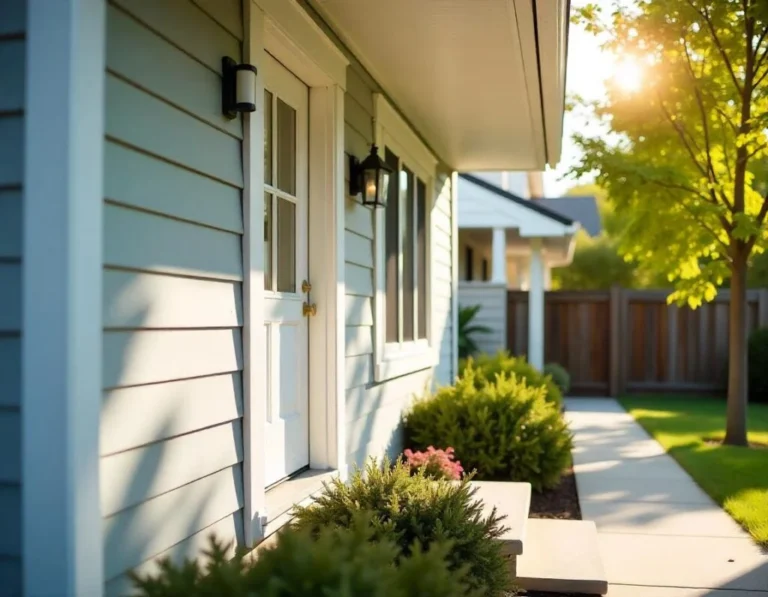
Engineered wood siding is composed of wood strands, fibers, or veneers treated with resins and waxes, then compressed under high temperature and pressure. It provides the visual appeal of real wood while offering improved dimensional stability, termite resistance, and uniformity.
-
Advantages: High resistance to splitting, checking, and warping; long spans reduce joint frequency; pre-finished options use durable baked-on coatings.
-
Disadvantages: Cut edges require field-applied protective sealants; susceptibility to moisture ingress if the substrate is damaged; lower mass than natural wood or stone.
-
Sustainability Profile: Typically manufactured from fast-growing, managed softwoods or recycled wood residuals, reducing the demand for old-growth timber.
2. Fiber Cement Siding
Fiber cement is composed of cellulose fibers, Portland cement, sand, and water. It is autoclaved to produce a non-combustible, dimensionally stable exterior finish that can be molded to mimic various textures, including wood grain and smooth stucco panels.
-
Advantages: Class A fire rating; high resistance to rot, insects, and high winds; will not corrode in coastal environments.
-
Disadvantages: Brittle material requiring careful handling and specialized cutting tools; heavy weight requires two-person installation; requires periodic repainting.
-
Sustainability Profile: High embodied energy due to cement manufacturing, but offset by a long lifespan and minimal maintenance requirements.
3. Natural Wood Cladding
Natural wood options, including Western Red Cedar, Redwood, and Siberian Larch, are valued for their natural grain patterns and workability. They require appropriate detailing, such as back-priming and spacing for expansion.
-
Advantages: Organic, renewable material with excellent design flexibility; high structural strength-to-weight ratio; natural resistance to decay in certain species.
-
Disadvantages: Requires regular maintenance (staining or oiling) to prevent color degradation and cupping; combustibility can be a concern in wildfire-prone areas.
-
Sustainability Profile: Low embodied energy if sourced from sustainably managed forests with third-party certification (e.g., FSC or PEFC).
4. Metal Panels (Zinc, Aluminum, and Steel)
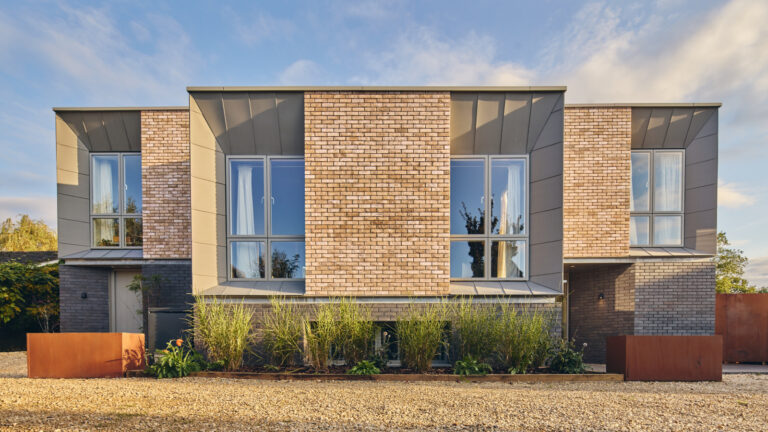
Metal facades are increasingly used in modern and transitional residential architecture. They are available in various systems, including standing seam, interlocking panels, and rainscreen cassettes.
-
Advantages: Fully recyclable; exceptional durability in extreme weather; low weight reduces structural load; non-combustible.
-
Disadvantages: Susceptible to denting and scratching; high thermal conductivity requires careful insulation detailing; edge flashing and joint details must be precise to prevent moisture penetration.
-
Sustainability Profile: Metals such as aluminum and zinc have high embodied energy, but their high recycling rates and long lifespans mitigate this impact.
5. Architectural Masonry and Thin Brick
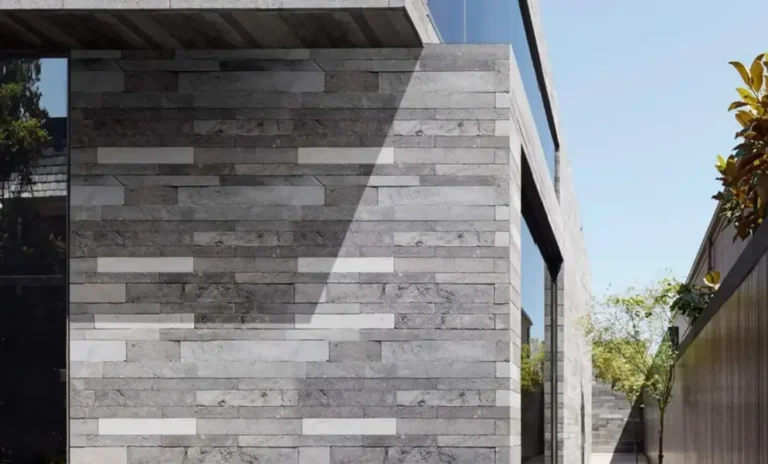
Masonry systems offer durability and thermal mass. Thin brick systems, which are adhered to a specialized drainage panel or masonry backer, provide a lower-weight alternative to traditional full-depth brick facades.
-
Advantages: Long lifespan exceeding 100 years; non-combustible; provides sound attenuation; requires minimal maintenance.
-
Disadvantages: Heavy weight requires deep foundations or shelf angles; complicated moisture barrier detailing; high installation cost.
-
Sustainability Profile: High embodied carbon, but balanced by minimal operational replacement and thermal performance over the structure’s lifetime.
6. High-Pressure Laminates (HPL)
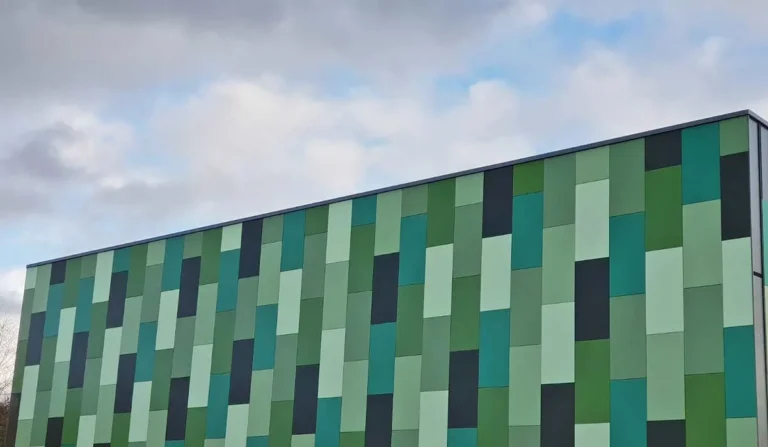
HPL panels consist of paper and wood-based fibers impregnated with thermosetting resins and bonded under high pressure. They are mounted on structural subframes to create a ventilated facade.
-
Advantages: Extreme resistance to impacts, chemicals, and graffiti; non-porous surface that is easy to clean; wide array of color and pattern options.
-
Disadvantages: High upfront material cost; requires a precision subframe; installation errors can result in panel failure due to thermal expansion.
-
Sustainability Profile: Embodied energy is high due to the resin binders, but the panels are highly durable and do not require chemical coatings during their operational life.
7. Polymeric Cladding (Vinyl and Polypropylene)
Polyvinyl chloride (PVC) and polypropylene cladding systems are manufactured through extrusion or injection molding processes. They are designed as lightweight, low-maintenance protective skins.
-
Advantages: Lowest initial capital cost; will not rot, peel, or corrode; simple installation requiring standard carpentry tools.
-
Disadvantages: Low impact resistance, particularly in freezing conditions; thermal expansion can cause oil-canning or warping; flammable; non-biodegradable.
-
Sustainability Profile: Petroleum-dependent manufacturing with limited recyclability at the end of its life cycle.
Comparison of Primary Cladding Systems
| Material Category | Approximate Lifespan (Years) | Maintenance Frequency | Average Embodied Carbon Index | Fire Rating | Wind Load Resistance |
| Engineered Wood | 30–50 | Low to Moderate (every 5–7 years) | Low | Moderate | High |
| Fiber Cement | 50–75 | Moderate (paint every 10–15 years) | Moderate | Class A (Non-combustible) | High |
| Natural Wood | 40–80 | High (annual to every 3 years) | Very Low | Low to Moderate | Moderate |
| Metal Panels | 60–100+ | Low (periodic cleaning) | High | Class A | Very High |
| Architectural Masonry | 100+ | Very Low | High | Class A | Very High |
| HPL Panels | 40–60 | Very Low | High | Moderate to High | High |
| Polymeric Siding | 20–40 | Very Low | Moderate | Low | Moderate |
Realistic Decision Logic for System Selection
Detailed Real-World Scenarios and Failure Modes Best exterior cladding for residential homes
Scenario 1: Coastal, High-Wind Zone
-
Constraints: High salt spray, wind loads up to 130 mph, and wind-driven rain.
-
Material Selection: Fiber cement siding installed over a rigid drainage plane with stainless steel fasteners.
-
Decision Points: Avoid exposed natural wood elements that require frequent refinishing due to salt-air degradation. Avoid steel framing connectors unless they are high-grade stainless steel to prevent galvanic corrosion.
-
Failure Mode: Water intrusion behind the joints during storm conditions. If the water-resistive barrier is not properly lapped, moisture can reach the sheathing, leading to hidden rot.
-
Second-Order Effects: Swelling of structural sheathing, fastener corrosion, and loss of shear strength in the wall assembly.
Scenario 2: Temperate and Wildfire-Prone Area
-
Constraints: High risk of wildfire, seasonal temperature fluctuations, and variable humidity.
-
Material Selection: Non-combustible architectural metal panels or fiber cement lap siding with zero-clearance non-combustible zones at the base.
-
Decision Points: Do not use wood or polymer-based materials within the first six vertical feet of the grade line. Ensure attic ventilation paths have non-combustible, corrosion-resistant mesh to prevent ember entry.
-
Failure Mode: Embers lodge in horizontal lap joints or behind the siding, igniting accumulated organic debris within the ventilation gap.
-
Second-Order Effects: Structural damage, spread of fire to the interior, or costly repairs to the exterior barrier system.
Scenario 3: Freezing, Freeze-Thaw Transition Zone
-
Constraints: Cycles of freezing and thawing, substantial snow loads, and significant temperature differences between the interior and exterior.
-
Material Selection: Vertical metal standing seam or highly durable, pre-finished engineered wood.
-
Decision Points: Ensure continuous exterior insulation (e.g., mineral wool or polyisocyanurate) is included to shift the dew point outside of the structural sheathing layer.
-
Failure Mode: Water penetrates porous surfaces or joints and freezes, expanding and causing spalling (in masonry) or cracking (in fiber cement or wood products).
-
Second-Order Effects: Loss of thermal resistance (R-value) in the wall assembly, mold growth, and premature failure of sealants.
Scenario 4: Urban Subtropical Environment
-
Constraints: High relative humidity throughout the year, elevated ambient temperatures, and biological decay vectors (termites, fungi).
-
Material Selection: High-pressure laminate panels (HPL) with an open-joint ventilated facade system.
-
Decision Points: Incorporate insect screens in the ventilation cavity at both the top and bottom of the wall to prevent entry by pests.
-
Failure Mode: Stagnant, humid air within the cavity combined with high external temperatures encourages biological growth on the inner face of the panels.
-
Second-Order Effects: Spore release into the interior through mechanical air vents and discoloration of the panel’s interior joints.
Planning, Cost, and Resource Dynamics
Executing a facade project requires an analysis of costs, labor availability, and long-term maintenance resources. The initial cost of materials represents only a fraction of the total expenditure; storage, staging, installation speed, and specialized tools must also be included in the financial projections.
Direct and Indirect Financial Analysis
-
Acquisition and Logistics Cost: The baseline cost of materials delivered to the site, including freight for oversized or heavy components such as stone or HPL panels.
-
Labor and Specialty Installation: Costs based on labor classification. For example, installing fiber cement requires different tools and labor hours than installing vertical metal siding.
-
Opportunity Costs: The time the home is uninhabitable or construction financing is active during an extended installation period.
-
Maintenance Reserves: Funds allocated over a 20-year period to clean, seal, paint, or repair the selected exterior surface.
Lifecycle Resource Estimates
| Material Category | Material Cost per Sq. Ft. | Installation Cost per Sq. Ft. | 20-Year Maintenance Cost | End-of-Life Disposal Impact |
| Engineered Wood | $4.50–$8.00 | $5.00–$8.50 | $3.00 | Moderate |
| Fiber Cement | $3.00–$6.50 | $6.00–$10.00 | $5.00 | Moderate |
| Natural Wood | $7.00–$14.00 | $7.50–$12.50 | $18.00 | Very Low |
| Metal Panels | $9.00–$18.00 | $10.00–$16.00 | $1.00 | Low |
| Masonry (Thin) | $10.00–$22.00 | $12.00–$20.00 | $2.00 | High |
| HPL Panels | $14.00–$28.00 | $15.00–$25.00 | $0.50 | High |
| Polymeric Siding | $1.50–$4.00 | $3.50–$6.00 | $1.50 | Very High |
Tools, Strategies, and Support Systems
Specifying the correct material for the building envelope requires access to structural, thermal, and hygrothermal design tools. These tools are used by professionals to prevent structural or moisture-related failures.
1. Hygrothermal Modeling Software (WUFI)
WUFI (Wärme und Feuchte Instationär) simulates the movement of heat and moisture through the wall assembly. By modeling the selected cladding in combination with the sheathing and insulation, the software indicates whether condensation will occur within the cavity over time.
2. Fastener Pull-Through Resistance Testing
This methodology determines the withdrawal strength of fasteners used for wind load resistance. Specifiers must ensure that the fastener schedule matches the local design wind speed and the structural capacity of the substrate.
3. Continuous Insulation (CI) Calculators
Used to determine the thickness of continuous insulation needed to prevent interior condensation and thermal bridging through the studs.
4. Rainscreen Design Guides
Technical guidelines published by architectural institutes that define minimum cavity depths and drainage area ratios (net free ventilation area).
5. Spectrophotometers for Color Retention
Used to measure the colorfastness and UV degradation of pre-finished siding products over extended periods of exposure.
6. Thermal Imaging Cameras
Used for post-occupancy evaluation to detect voids in insulation, moisture accumulation, and air leakage points in the cladding assembly.
7. Non-Destructive Moisture Meters
Tools designed to measure the moisture content of wood and masonry substrates without having to remove large sections of the wall assembly.
Risk Landscape and Systemic Failure Modes
Understanding the risk landscape involves categorizing the various failure modes that can affect the building envelope.
1. Hygrothermal Failures
-
Failure Mode: Water vapor diffuses from the interior and condenses on the cold side of the sheathing during winter.
-
Consequence: Fungal rot in wood framing and degradation of gypsum-based sheathings.
-
Correction: Installation of a vapor-permeable, water-resistive barrier (WRB) and a ventilated cavity.
2. Structural/Thermal Failures
-
Failure Mode: Inadequate allowance for the thermal expansion and contraction of metal or HPL panels.
-
Consequence: Buckling, distortion, and shearing of the mechanical fasteners.
-
Correction: Use of sliding-point and fixed-point installation details to allow for movement.
3. Environmental and Biological Failures
-
Failure Mode: Accumulation of dirt and moisture behind siding in shaded, humid environments.
-
Consequence: Accelerated growth of mold and lichen, leading to surface stains and material degradation.
-
Correction: Periodic cleaning and provision of adequate ground and roof clearance.
Governance, Maintenance, and Long-Term Adaptation
A cladding material requires a proactive maintenance schedule to prevent deterioration. The governance of the building envelope involves regular inspections, cleaning, and replacement of localized components.
Comprehensive Facade Inspection Checklist
-
Quarterly Inspections: Check drainage paths at the base of the wall to ensure they are not blocked by mulch, soil, or debris.
-
Biannual Fastener Inspection: Inspect visible fasteners for signs of corrosion or backing out, particularly in high-wind zones.
-
Joint Sealant Inspection: Check elastomeric sealants around windows, doors, and expansion joints for cracking, loss of adhesion, or degradation.
-
Vapor-Permeable Membrane Review: After severe storm events, inspect the upper edges of the wall assembly to ensure there is no water penetration.
Adaptation Strategies for Extreme Climate Events
-
Impact-Resistant Retrofits: In regions with a history of hail or storm damage, consider upgrading exterior cladding to fiber cement or metal paneling.
-
Thermal Envelope Upgrades: When re-cladding, add a layer of continuous insulation over the existing exterior sheathing to bring the assembly up to current energy efficiency standards.
-
Coating Regeneration: Apply new protective sealants to natural wood surfaces every 2 to 3 years to maintain color and moisture resistance.
Measurement, Tracking, and Evaluation
Evaluating the performance of a residential facade requires monitoring both physical metrics and visual changes over time.
Leading vs. Lagging Indicators
-
Leading Indicators: Changes in color (measured using spectrophotometers), sealant degradation, and slight loosening of fastener heads. These indicators allow for maintenance before a structural failure occurs.
-
Lagging Indicators: Rotted sheathing, mold inside the wall cavity, visible panel buckling, and water infiltration at the interior baseboards.
Documentation and Diagnostics
-
Photographic Records: Establish fixed photographic positions around the structure’s perimeter to monitor changes in the material surface each year.
-
Thermal Transmittance Testing: Measure the U-value of the wall assembly every 5 years to ensure the insulation system has not settled or absorbed moisture.
-
Moisture Logs: Maintain monthly records of moisture levels in the structural sheathing, particularly on north-facing and shaded walls.
Common Misconceptions and Oversimplifications
1. “Cladding materials are maintenance-free.”
-
Correction: Every material requires some level of inspection and maintenance. Even durable materials such as metal panels and masonry require cleaning to prevent surface oxidation and mortar degradation.
2. “A thicker cladding material is always stronger and more durable.”
-
Correction: The performance of the facade depends on the integrity of the support system, the installation of the drainage gap, and the connection to the underlying substrate. Excess weight can increase the structural load on the foundation without improving durability.
3. “The exterior siding is the primary barrier against water penetration.”
-
Correction: In modern building science, the primary barrier is the water-resistive barrier (WRB) combined with a properly detailed rainscreen cavity. The exterior skin functions primarily as a sunshade and a screen against the majority of liquid water.
4. “All wood-based sidings perform the same.”
-
Correction: Natural wood, fiber-reinforced cement, and engineered wood react differently to moisture and UV radiation. Each material requires distinct installation methods and maintenance schedules.
5. “Air sealing the entire exterior prevents moisture problems.”
-
Correction: Air tightness is important, but a wall assembly must allow water vapor to escape. Trapping moisture inside the wall leads to fungal growth and structural failure.
6. “The best exterior cladding for residential homes is the most expensive option on the market.”
-
Correction: The best exterior cladding for residential homes is the material that matches the building’s climate loads, maintenance capabilities, and structural capacity. An expensive material that is inappropriate for the climate can fail more quickly than a lower-cost, correctly specified alternative.
Ethical, Practical, and Contextual Considerations
The selection of materials for the building envelope has environmental and social consequences. Architects and specifiers must consider the embodied carbon of the materials they choose. For instance, natural wood cladding from sustainably managed forests acts as a carbon sink throughout its operational life, whereas highly processed cementitious or synthetic materials produce greenhouse gas emissions during manufacturing.
Contextual considerations also include the building’s aesthetic and cultural fit within its neighborhood. A facade design should blend with the surrounding environment while providing technical performance. By designing for durability and long-term adaptation, specifiers reduce the need for premature material replacement, minimizing the amount of construction debris sent to landfills.
Conclusion
Selecting the most suitable facade material requires an understanding of building physics, environmental factors, and the maintenance needs of the structure. The best exterior cladding for residential homes cannot be reduced to a single material; rather, it is part of a complex system of ventilation and structural support.
Specifiers should approach the design of the building envelope with attention to moisture management and continuous insulation. By choosing the correct material composition and following proper installation details, the building will remain durable and energy-efficient over its lifespan.